

Early Detection Can Save Your Life
The CIZ1B Biomarker Blood Test for Early Detection of Lung Cancer is Now Available in the Dallas-Fort Worth and San Antonio Metropolitan Areas
Why Early Detection is Important
STAGE I
LUNG CANCER
Lung cancer can grow quietly. You might feel healthy, even while the disease is progressing. In many cases, symptoms don't appear until it's too late—when cancer has already spread and treatment becomes more difficult.
But when lung cancer is found early, everything changes:
- 63% survival rate when diagnosed at Stage I 1
- Only 8% survival once cancer has spread 1
Early detection means more treatment options—and a better chance at survival.
Five-Year Survival 1
The CIZ1B Lung Cancer Test
A Simple Blood Test Finds Lung Cancer Early
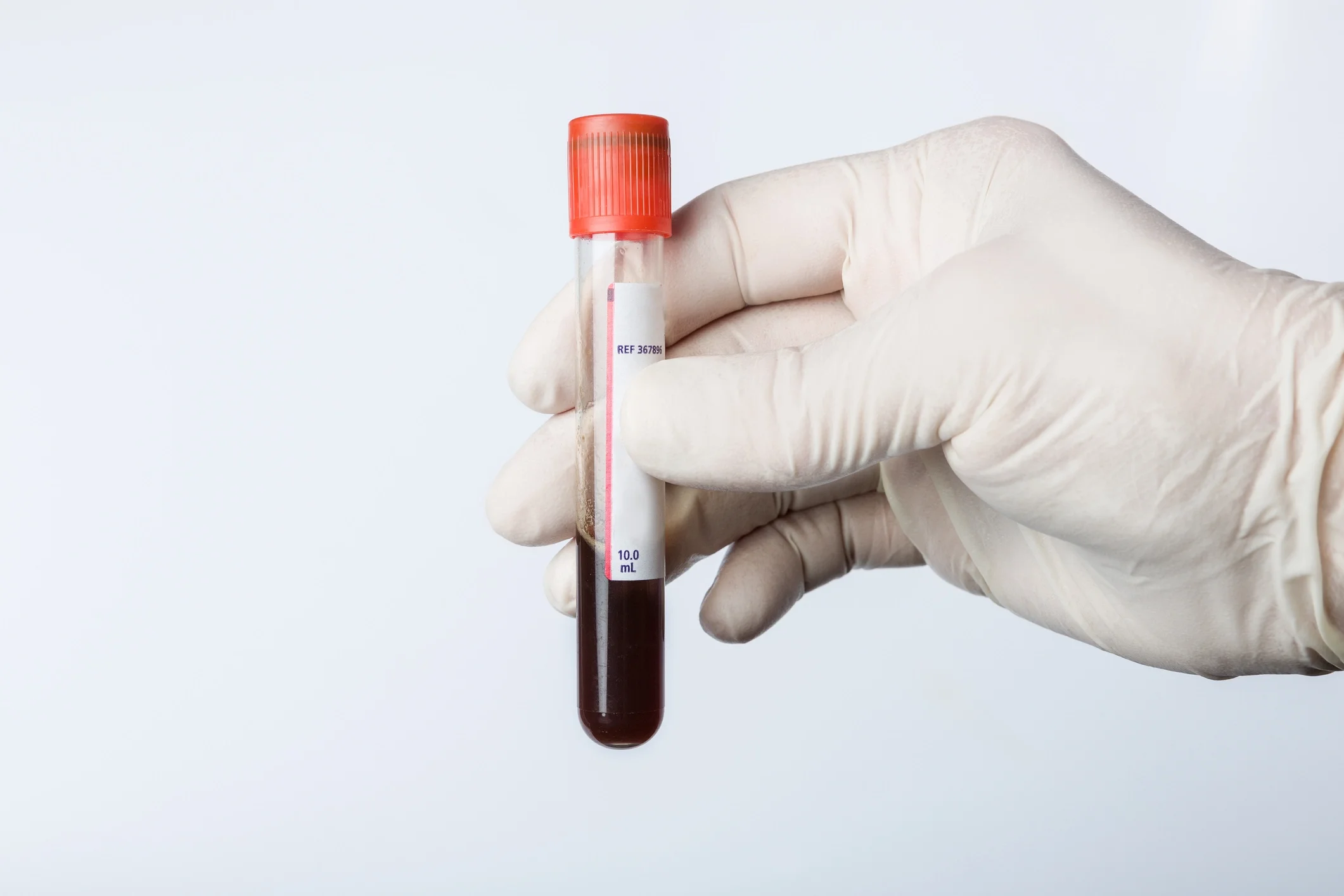
Cizzle Bio is solving the challenge of early detection with the CIZ1B biomarker test—a groundbreaking blood test that can detect cancer in it’s earliest stages, when it’s most treatable.
Quick and convenient – A simple blood draw (less than a tablespoon)

No stress or discomfort – No radiation, no special machines
Can be ordered by your doctor – Just like any routine blood test
REASONSWhy Should You Consider the CIZ1B Test?

1.
Lung Cancer Is Often Silent.
Many people don’t have symptoms or feel sick until the cancer is at an advanced stage and has spread to other parts of the body. ²

2.
High-Risk Patients Need Screening.
Data from the American Lung Association show that of the 14.2 million Americans eligible for lung cancer screening, only 5.8% have been screened.3
The U.S. Preventive Services Task Force recommends lung cancer screening for people at high risk, including those who: 4
- Have a 20 pack-year or more smoking history
- Smoke now or have quit within the past 15 years
- Are between 50 and 80 years old
Research also shows increased lung cancer risk from:
- Exposure to radon5, asbestos6, or heavy air pollution7
- A family history of lung cancer8
- Personal history of chronic lung disease9
- Chronic wildfire exposure10
- Firefighting occupations11

3.
Catching Cancer Early Improves Survival.
Early detection of lung cancer is associated with better outcomes and longer survival.¹²
HOW IS IT DIFFERENT?A Smarter, More Accurate Way to Detect Lung Cancer
DETECTS EARLY-STAGE LUNG CANCER (STAGE 1)

More treatment options are available, and you have a better chance at recovery.
AFFORDABLE AND ACCESSIBLE

Can be ordered by any primary care or family medicine physician.
SIMPLE, STRESS-FREE BLOOD DRAW

No troublesome procedures.
HIGH ACCURACY

Backed by strong preliminary scientific data showing sensitivity at 95% for Stage 1 detection.14
REDUCES RADIATION EXPOSURE THAT RAISES CANCER RISK

Low-dose CT (LDCT) is the most common lung cancer screening tool, but a 2023 JAMA study linked it to over 100,000 cancers—lung cancer being the most frequent. 13
PEACE OF MIND

Allows you to be proactive about your health.
WHAT SHOULD I DO NEXT?Take the First Step Toward Early Detection

If you or a loved one is at risk for lung cancer, talk with your healthcare provider about early detection options. The CIZ1B Biomarker Blood Test for Lung Cancer offers a simple blood-based approach to detecting lung cancer at an early stage, when more treatment options may be available. Because when it comes to lung cancer, early detection saves lives.
Download Patient Brochure
Learn more about the biomarker blood test, who may benefit from it, and how early detection can help guide next steps.
The CIZ1B Biomarker Test Is Now Available in Dallas-Fort Worth and San Antonio

The CIZ1B Biomarker Blood Test for Lung Cancer is now available through healthcare providers in the Dallas–Fort Worth and San Antonio metropolitan areas.
If you or a loved one may be at risk for lung cancer, talk with your healthcare provider about early detection and whether the CIZ1B test may be right for you.
Contact us to learn more about participating providers and how to access the test.
References
-
Lung Cancer Additional Measures - Lung Cancer Trends Brief | American Lung Association
https://www.lung.org/research/trends-in-lung-disease/lung-cancer-trends-brief/lung-cancer-additional-measures
-
American Cancer Society. (2024, January 29). Lung cancer early detection, diagnosis, and staging. Retrieved from https://www.cancer.org/cancer/types/lung-cancer/detection-diagnosis-staging/detection.html
-
American Lung Association. (2024). State of lung cancer: Key findings. Retrieved October 26, 2025, from https://www.lung.org/research/state-of-lung-cancer/key-findings
-
https://www.uspreventiveservicestaskforce.org/uspstf/recommendation/lung-cancer-screening
-
Ngoc, L. T. N., Phuong, T. T. T., & Anh, L. X. (2022). Human health impacts of residential radon exposure: A systematic review. International Journal of Environmental Research and Public Health, 20(1), 97. https://doi.org/10.3390/ijerph20010097
-
Van Zandwijk, N. (2024). Asbestos-related lung cancer: An underappreciated entity. Environmental Toxicology and Pharmacology, 118, 104073. https://doi.org/10.1016/j.etap.2024.104073
-
Berg, C. D., Avila, R., & de Klerk, N. (2023). Air pollution and lung cancer: A review by the International Lung Cancer Consortium (ILCCO). Journal of Thoracic Oncology, 18(12), 2038–2051. https://doi.org/10.1016/j.jtho.2023.08.022
-
Kim, S. H., Kim, J. S., & Lee, J. H. (2024). The association between family history of lung cancer and lung cancer development in a Korean population. Cancers, 16(11), 2063. https://doi.org/10.3390/cancers16112063
-
Criner, G. J., Han, M. K., & Martinez, F. J. (2022). Chronic obstructive pulmonary disease and lung cancer. Journal of Thoracic Oncology, 17(5), 615–628. https://doi.org/10.1016/j.jtho.2021.12.005
-
Navarro, K. M., Kleinman, M. T., & Balmes, J. R. (2019). Wildland firefighter smoke exposure and risk of lung cancer and cardiovascular disease mortality. Environmental Research, 173, 252–261. https://doi.org/10.1016/j.envres.2019.03.046
-
LeMasters, G. K., Lockey, J. E., & Yiin, J. H. (2023). Cancer risk and mortality among firefighters: A meta-analytic review. International Archives of Occupational and Environmental Health, 96(8), 1783–1806. https://doi.org/10.1007/s00420-023-02058-8
-
Tang, Y., Li, J., Liu, Y., Li, X., Wang, H., & Wang, Y. (2022). Advances in lung cancer screening and early detection. Frontiers in Oncology, 12, 871985.
-
Projected Lifetime Cancer Risks From Current Computed Tomography Imaging | Less is More | JAMA Internal Medicine | JAMA Network
https://jamanetwork.com/journals/jamainternalmedicine/fullarticle/2832778#google_vignette
-
Coverley D, Higgins G, West D, et al. A quantitative immunoassay for the lung-cancer biomarker CIZ1b in patient plasma. Clin Biochem. 2017;50(6):336-343.