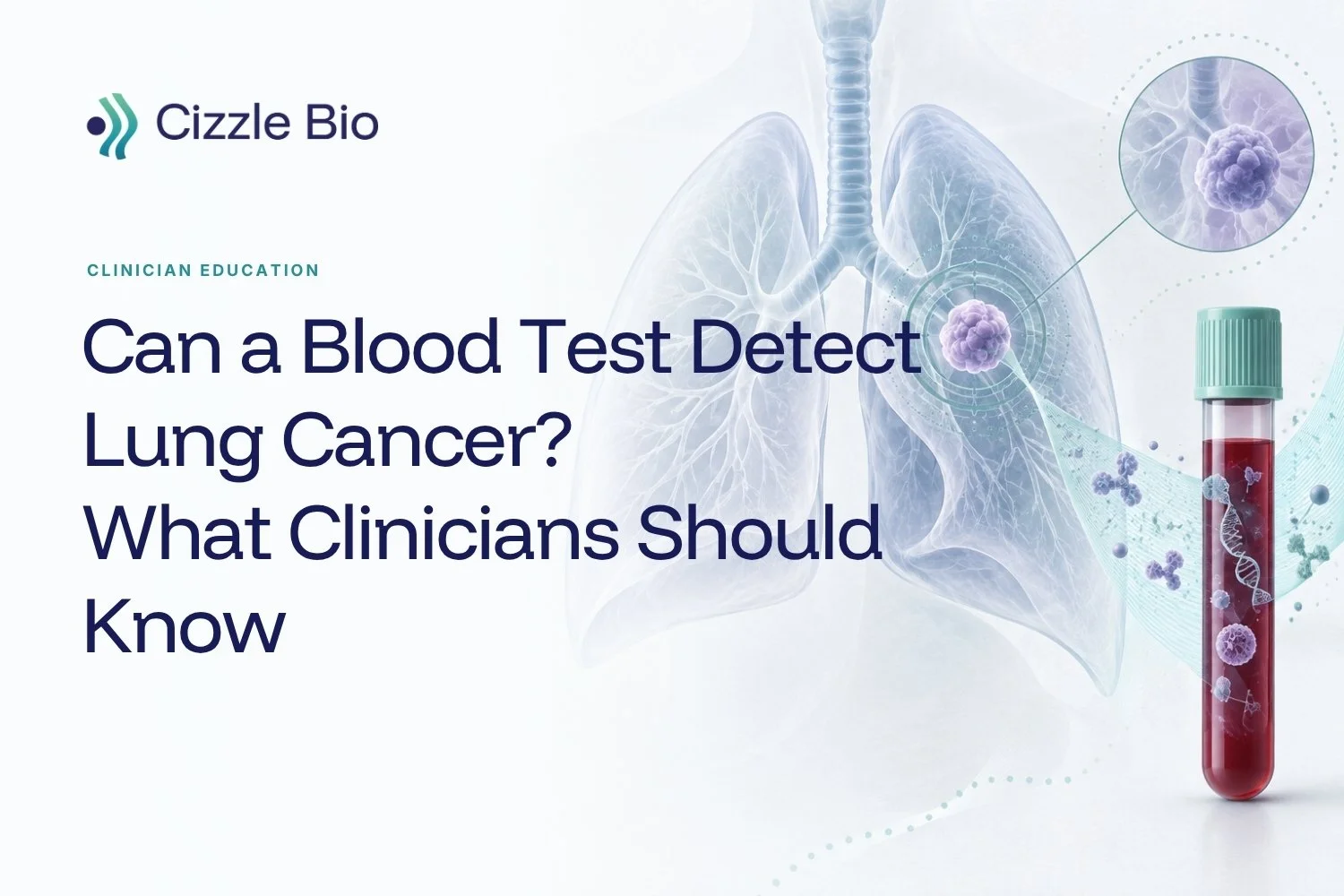
Can a blood test detect lung cancer? What clinicians should know
Quick answer:
When a pulmonary nodule is identified, a clinician evaluates imaging together with the patient’s history, symptoms, and risk factors. A biomarker blood test such as the CIZ1B test may provide an additional data point, but it does not replace imaging, biopsy, specialist evaluation, or clinical judgment.
Key takeaways
A pulmonary nodule is a finding that requires clinical interpretation, not a diagnosis by itself.
Imaging remains central to characterizing and following a nodule.
The CIZ1B test provides biomarker information that may complement the broader assessment.
Licensed Dallas–Fort Worth providers can review evidence and ordering information online.
A pulmonary nodule can begin a complex clinical decision process. Many nodules are benign, but the finding may require review of a patient’s history, symptoms, smoking exposure, age, occupational or environmental risks, prior imaging, and other relevant factors. For clinicians, the central question is not simply whether a nodule is present. It is how the finding fits into the patient’s complete clinical picture—and what information may help guide an appropriate next step.
Can lung cancer be detected in a blood test?
A blood test may measure biomarkers associated with cancer, but no blood test result should be interpreted by itself as a lung cancer diagnosis. The result must be evaluated by a licensed healthcare provider together with symptoms, risk factors, imaging, and other appropriate clinical information. The CIZ1B Biomarker Blood Test for Lung Cancer provides biomarker information from a blood sample. The CIZ1B test is intended to complement established clinical approaches; it does not replace LDCT, other imaging, biopsy, specialist evaluation, or clinical judgment.
Imaging remains essential
Low-dose computed tomography and other imaging approaches provide valuable information about the lungs. Imaging may help characterize a nodule’s size, location, morphology, and change over time. Depending on the circumstances, a clinician may recommend surveillance, specialist evaluation, additional diagnostic procedures, or another course of action. No biomarker test should be presented as a substitute for imaging, biopsy, specialist evaluation, or clinical judgment.
Where biomarker information may contribute
The CIZ1B Biomarker Blood Test for Lung Cancer provides biomarker information from a blood sample. A licensed healthcare provider may consider this information alongside the patient’s history, symptoms, risk factors, imaging findings, and other clinical data. The CIZ1B test is intended to complement established clinical approaches. It does not diagnose lung cancer by itself and should not be interpreted in isolation. For a clinician assessing an indeterminate pulmonary nodule, an additional biomarker data point may help support a more informed conversation about the overall clinical picture. The appropriate interpretation and next step remain the responsibility of the treating healthcare provider.
Questions to consider in practice
When reviewing whether additional biomarker information may be useful, clinicians may consider:
What is the patient’s overall lung cancer risk profile?
What did current and prior imaging show?
Are symptoms or exposure history clinically relevant?
Would another data point contribute meaningfully to the assessment?
How would the result be interpreted alongside the established care pathway?
Frequently asked questions
Can a blood test diagnose whether a pulmonary nodule is cancer?
No single blood test should be used by itself to diagnose whether a pulmonary nodule is cancer. A healthcare provider interprets imaging, clinical history, risk factors, symptoms, and other appropriate information.
Does the CIZ1B test replace LDCT or other imaging?
No. The CIZ1B test provides biomarker information and is intended to complement—not replace—LDCT, imaging, biopsy, specialist evaluation, or clinical judgment.
Where can clinicians access CIZ1B test information?
Licensed healthcare providers serving Dallas–Fort Worth can review CIZ1B test clinical resources and begin the provider setup process through the Cizzle Bio physician page.
Access for Dallas–Fort Worth providers
The CIZ1B test is commercially available through licensed healthcare providers serving Dallas–Fort Worth. Provider resources include clinical information, potential patient considerations, ordering and specimen information, and onboarding steps.
Review CIZ1B test clinical resources and begin provider ordering setup.