Lung cancer screening: LDCT and the CIZ1B test in lung cancer assessment
Quick answer
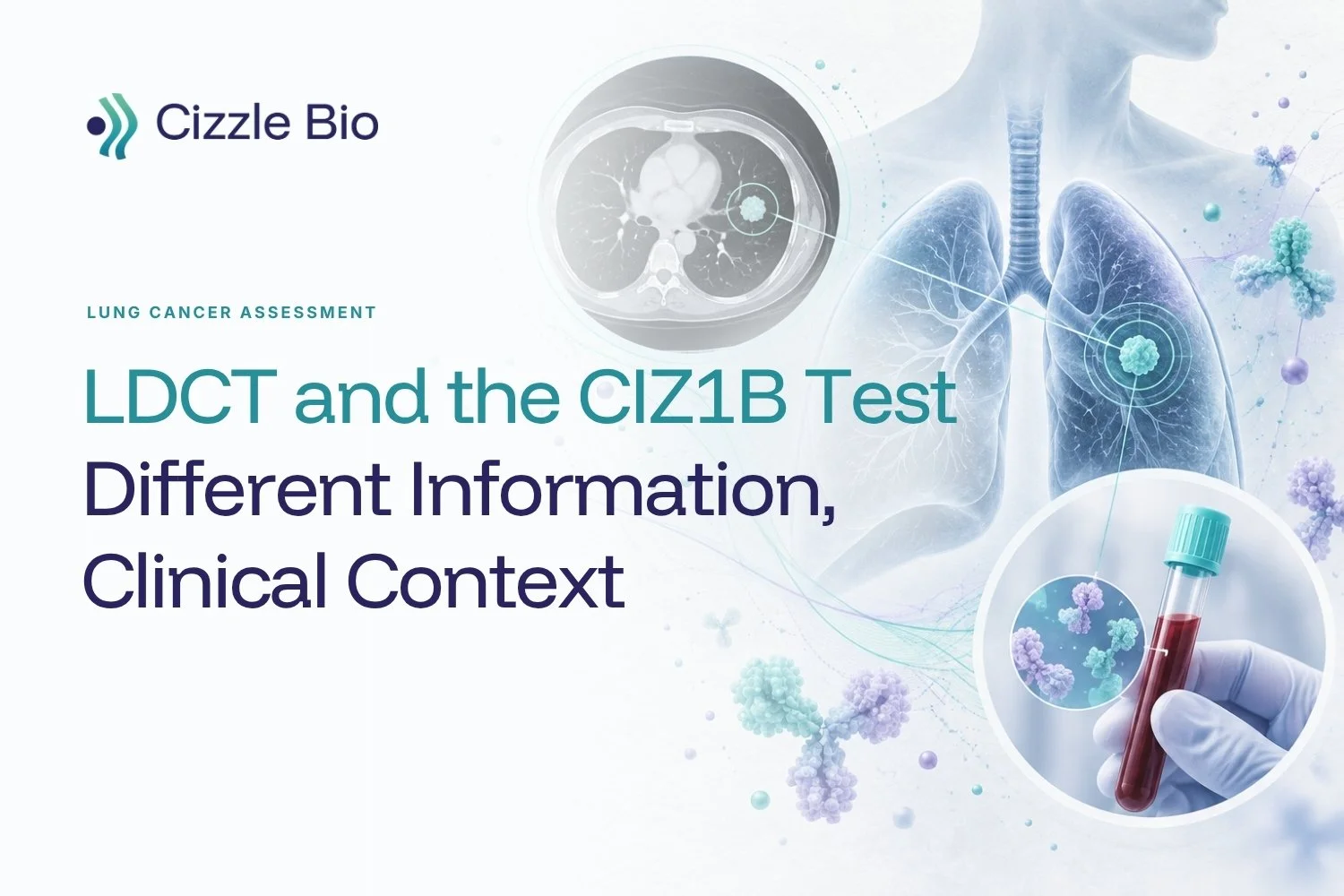
LDCT provides images of the lungs, while the CIZ1B test provides biomarker information from a blood sample. They are not interchangeable. The CIZ1B test is intended to complement established screening and clinical evaluation—not replace LDCT or diagnostic care.
Key takeaways
LDCT is an imaging procedure used for lung cancer screening in eligible people.
The CIZ1B test is a biomarker blood test that provides a different type of information.
A licensed provider interprets both within the patient’s complete clinical context.
Provider resources are available in Dallas–Fort Worth and San Antonio.
Lung cancer assessment often includes several types of information. Patient history, smoking and exposure history, symptoms, physical findings, imaging, and other diagnostic information may all influence clinical decision-making. Two terms that may appear in these conversations are low-dose computed tomography, or LDCT, and biomarker blood testing. They are not interchangeable.
What LDCT contributes

LDCT is an imaging procedure. It produces detailed images of the lungs and may identify nodules or other findings that require clinical interpretation. For people who meet established eligibility criteria, annual LDCT screening can play an important role in detecting lung cancer earlier. A healthcare provider determines whether a patient meets screening criteria and how an imaging finding should be evaluated.
What the CIZ1B test contributes
The CIZ1B test is a biomarker blood test. It measures the presence of the CIZ1B protein biomarker from a blood sample. The result may provide a licensed healthcare provider with an additional data point to consider during a comprehensive assessment. The CIZ1B test does not produce an image of the lungs, does not replace LDCT, and does not independently diagnose lung cancer. It should be interpreted with clinical judgment and other relevant information.
For more on how biomarker information fits into pulmonary nodule assessment, read Can a blood test detect lung cancer? What clinicians should know.
Complementary, not competing

The most useful way to understand the relationship is that LDCT and the CIZ1B test provide different kinds of information:
LDCT provides imaging information.
The CIZ1B test provides biomarker information.
A clinician may consider both types of information, along with the patient’s broader clinical context. The appropriate evaluation pathway varies from patient to patient.
Evidence and clinical interpretation
A 2026 peer-reviewed study in The Journal of Applied Laboratory Medicine evaluated the ELISA-based assay used for the CIZ1B test that is now commercially available. The study reported 94% sensitivity and a 97% negative predictive value in the early-stage cohort. These findings should be understood within the study population and design. They do not eliminate the need for established screening, imaging, diagnostic procedures, or clinical evaluation.
For a closer look at the study findings and their limitations, review the peer-reviewed evidence supporting CIZ1B.
Frequently asked questions
Is the CIZ1B test an alternative to LDCT lung cancer screening?
No. LDCT is an imaging procedure used for screening in eligible people. The CIZ1B test provides biomarker information and is intended to complement—not replace—LDCT, imaging, diagnostic procedures, or clinical judgment.
What is the principal difference between the CIZ1B test and LDCT?
LDCT produces images of the lungs. The CIZ1B test measures biomarker information from a blood sample. A healthcare provider determines how either type of information applies to an individual patient.
Who interprets a CIZ1B test result?
A licensed healthcare provider interprets the result alongside the patient’s history, symptoms, risk factors, imaging, and other relevant information.
Texas provider access
Licensed healthcare providers in Dallas–Fort Worth and San Antonio can review CIZ1B test clinical information and ordering setup steps. Medical Affairs support is available for clinical and workflow questions.
For answers about availability, clinical use, and ordering setup, visit the CIZ1B provider FAQ.